

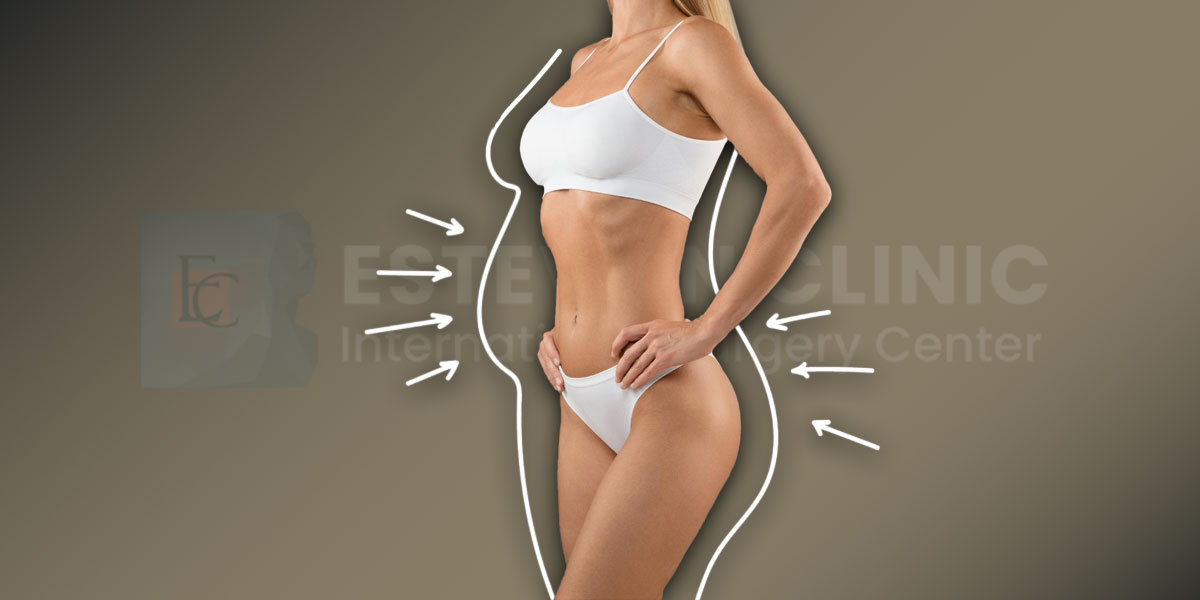
Liposuction in Turkey typically costs between €2,500 and €5,000 as an all-inclusive package, depending on how many areas are treated and which technique is used. The procedure removes localized fat that has not responded to diet and exercise. It reshapes the body, but it is not a weight loss treatment.
This guide is written for international patients comparing liposuction abroad. It explains the techniques offered in Turkey, what the price usually includes, who is a suitable candidate, the real risks, and how recovery and the flight home work. It does not replace a consultation with a qualified plastic surgeon.
At Estevien Clinic in Istanbul, liposuction consultations and operations are led by Op. Dr. Okan Morkoç.
What liposuction can and cannot do
Liposuction permanently removes fat cells from specific areas, which changes body contour. It works best for stubborn pockets of fat in people who are already close to a stable weight.
- It can: reduce fat on the abdomen, flanks, back, thighs, arms, chin and chest, and improve proportions between areas.
- It cannot: treat obesity, tighten loose skin, remove cellulite, or repair separated abdominal muscles.
- Loose skin: when skin has lost its elasticity, removing fat alone can make it look looser. In that case a lift such as a tummy tuck may be the more suitable operation.
The fat cells that are removed do not come back. The remaining fat cells can still grow with weight gain, so results last when weight stays stable.
Liposuction techniques used in Turkey
All modern techniques remove fat through a thin tube called a cannula, inserted through small incisions. They differ in how the fat is loosened before it is removed.
| Technique | How it works | Typically used for |
|---|---|---|
| Tumescent liposuction | A fluid containing local anaesthetic and adrenaline is injected first to reduce bleeding and make fat easier to remove. | The standard base technique for most areas. |
| Power-assisted liposuction (PAL) | A vibrating cannula breaks up fat with less physical force. | Larger areas and fibrous fat, such as the back or male chest. |
| VASER (ultrasound-assisted) | Ultrasound energy loosens fat cells before suction. | Finer contouring and so-called high-definition results. |
| Laser-assisted liposuction | Laser energy liquefies fat before removal. | Smaller areas such as the chin and neck. |
Most surgeons combine the tumescent method with one of the others. The right choice depends on the area, the amount of fat and your skin quality, so the technique is decided by the surgeon after examination, not by price.
What is Lipo 360?
Lipo 360 treats the whole midsection in one session: the abdomen, both flanks and the lower back. It gives a more even result around the waist than treating the front alone, and it takes longer and costs more than single-area liposuction.
Liposuction cost in Turkey
The typical Turkish market price for liposuction is €2,500 to €5,000 for an all-inclusive package. One or two small areas sit at the lower end, while Lipo 360 or several areas treated together sit at the upper end.
These are general market figures for international patients, not a quote from any single clinic. An exact price can only be given after a surgeon has reviewed your photos and medical history.
What affects the price
- Number and size of areas: the biggest factor. Each added area increases operating time.
- Technique: VASER and other energy-assisted methods usually cost more than standard tumescent liposuction.
- Volume of fat removed: larger volumes mean longer surgery and, in some cases, an overnight hospital stay.
- Hospital and anaesthesia: a full hospital setting with general anaesthesia costs more than a small procedure under local anaesthetic.
- Combined procedures: liposuction is often combined with fat transfer or a lift, which changes the total.
Turkey compared with the United States
| Country | Typical price | What the figure covers |
|---|---|---|
| Turkey | €2,500 to €5,000 | Usually an all-inclusive package: surgery, anaesthesia, hospital, hotel and transfers. Flights are not included. |
| United States | $4,300 to $7,500 | Surgeon’s fee only, according to the American Society of Plastic Surgeons. Anaesthesia, facility fees and other costs are added on top. |
The comparison is not like for like, because the Turkish figure is a package and the US figure is one part of the bill. Prices in the United Kingdom and Germany are also generally higher than in Turkey, mainly because of higher staff and facility costs.
What an all-inclusive package usually covers
| Usually included | Usually not included |
|---|---|
| Consultation and pre-operative blood tests | International flights |
| Surgeon, anaesthetist and operating room fees | Travel insurance |
| Hospital stay where needed | Extra hotel nights |
| Compression garment | Meals and personal expenses |
| Hotel accommodation for the recovery period | Treatment of unrelated conditions |
| Airport, hotel and hospital transfers | Later revision surgery |
| Follow-up checks before you fly home | Lymphatic massage sessions, unless stated |
Packages differ between clinics. Ask for a written, itemized list of what is included before you pay a deposit.
Who is a good candidate?
The best candidates are adults at a stable weight with firm, elastic skin and fat that is concentrated in specific areas. Suitability is always confirmed in a medical consultation.
- Weight has been stable for several months, and you are close to your goal weight.
- Body mass index is usually below about 30. Many surgeons will not operate above this for safety reasons.
- Skin has good elasticity, so it can retract after fat is removed.
- You do not smoke, or you are willing to stop well before and after surgery.
- You have no uncontrolled heart, lung, clotting or metabolic conditions.
- Your expectations are realistic: an improvement in shape, not a transformation in weight.
If the main concern is excess skin after pregnancy or major weight loss, liposuction alone is unlikely to give the result you want.
How the procedure works
Liposuction usually takes one to three hours and is performed under general anaesthesia or sedation, depending on the areas and volume. Small single areas can sometimes be treated under local anaesthetic.
- Marking: the surgeon marks the treatment areas on your skin while you are standing.
- Infiltration: tumescent fluid is injected to limit bleeding and numb the tissue.
- Fat removal: the cannula is moved through the fat layer and the loosened fat is suctioned out.
- Closing: the small incisions are closed or left to drain, and a compression garment is fitted.
Many patients go back to their hotel the same day. When a large volume of fat is removed, an overnight stay with monitoring is the safer choice.
Is liposuction in Turkey safe?
Liposuction is a common operation, but it is real surgery with real risks wherever it is performed. Safety depends on the surgeon’s training, the facility and careful patient selection, not on the country.
Risks to understand
- Common and usually temporary: bruising, swelling, numbness and fluid collections called seromas.
- Cosmetic: uneven contours, asymmetry, or loose skin if elasticity is poor. Some patients need a touch-up procedure.
- Less common but serious: infection, blood clots in the legs or lungs, fat embolism, fluid imbalance, reactions to anaesthetic drugs, and injury to deeper structures.
Risk rises with the amount of fat removed and with the length of the operation. Removing more than about five litres in one session is considered large-volume liposuction and carries a higher complication rate, so responsible surgeons limit the volume or split treatment into stages.
What to check before booking
- The surgeon is a specialist in plastic, reconstructive and aesthetic surgery.
- The operation takes place in a licensed hospital or surgical centre with an anaesthetist present.
- The clinic holds health tourism authorization from the Turkish Ministry of Health.
- You receive a clear consent form that lists the risks in a language you understand.
- The clinic explains how much fat it plans to remove and why.
- There is a named contact for problems after you return home.
Be cautious with any offer that promises a fixed number of kilos lost, guarantees a result, or agrees to treat many large areas in a single session without discussion.
Recovery timeline
Most people return to desk work within about a week, while swelling takes months to settle fully. Healing varies between individuals, and your surgeon’s instructions take priority over any general timeline.
| Time | What to expect |
|---|---|
| First 3 days | Soreness, swelling and fluid drainage from the incisions. Short walks are encouraged to lower the risk of blood clots. |
| Days 4 to 7 | Bruising peaks and starts to fade. Follow-up check with the surgical team. Light daily activity is usually possible. |
| Weeks 2 to 4 | Return to desk work and gentle exercise as advised. The compression garment is still worn most of the day. |
| Weeks 4 to 6 | Most people stop wearing the garment and return to full exercise once cleared. |
| Months 3 to 6 | Residual swelling resolves and the final contour becomes visible. |
How long to stay and when you can fly
Plan to stay in Turkey for about five to seven days. This allows time for the first follow-up checks and for the surgeon to confirm that you are fit to travel. Larger or combined operations may need a longer stay.
Flying soon after surgery raises the risk of blood clots. On the flight home, walk regularly, drink plenty of water, wear compression stockings if advised, and follow any medication your surgeon has prescribed. Only the operating surgeon can clear you to fly.
Combining liposuction with other procedures
Liposuction is often part of a larger plan. Combining operations can reduce total recovery time, but it also increases time under anaesthesia and the overall risk, so it must be decided case by case.
- Fat transfer: the removed fat can be purified and used elsewhere, most often in a Brazilian butt lift.
- Tummy tuck: adds skin removal and muscle repair when the abdomen is loose. See our guide to tummy tuck in Turkey.
- Mommy makeover: combines breast and body procedures after pregnancy. See our mommy makeover guide.
You can read more about the procedure itself on our liposuction page.
Frequently asked questions
How much does liposuction cost in Turkey?
Liposuction in Turkey typically costs €2,500 to €5,000 as an all-inclusive package. The final price depends on the number of areas, the technique and whether other procedures are added.
How much fat can be removed in one session?
There is no single number that suits everyone. Removing more than about five litres in one session is classed as large-volume liposuction and carries higher risk, so surgeons set a limit based on your body size and health.
Will I lose weight after liposuction?
Only a little. Liposuction changes shape, not weight in any meaningful way. People who expect a large drop on the scale are usually disappointed.
Are the results permanent?
The removed fat cells do not return. If you gain weight later, the remaining fat cells can enlarge, including in other areas, so a stable weight protects the result.
Does liposuction leave scars?
The incisions are only a few millimetres long and are placed in discreet locations. They usually fade over several months, although how scars heal differs from person to person.
How long do I need to wear the compression garment?
Usually four to six weeks. The garment controls swelling and helps the skin settle evenly, so wearing it as instructed matters for the final result.
When can I exercise again?
Walking is encouraged from the first day. Light exercise is often allowed after two to three weeks, and full training after four to six weeks, once your surgeon agrees.
Is liposuction painful?
Most people describe the first days as sore and tight, similar to intense muscle ache, rather than sharply painful. Prescribed pain relief usually keeps it manageable.
Can liposuction be done under local anaesthetic?
Small single areas sometimes can. Larger or multiple areas are normally treated under sedation or general anaesthesia for comfort and safety.
Next steps
- Decide which areas bother you most and what result you realistically expect.
- Reach a stable weight and stop smoking before planning surgery.
- Send clear photos and your medical history for a surgeon’s assessment.
- Ask for a written plan that states the technique, the areas, the expected volume and what the package includes.
- Discuss your travel plans and any clotting risk factors with your own doctor before you book.